 Same-Day MVA Appointments Available — No Insurance Required | Lien-Based Treatment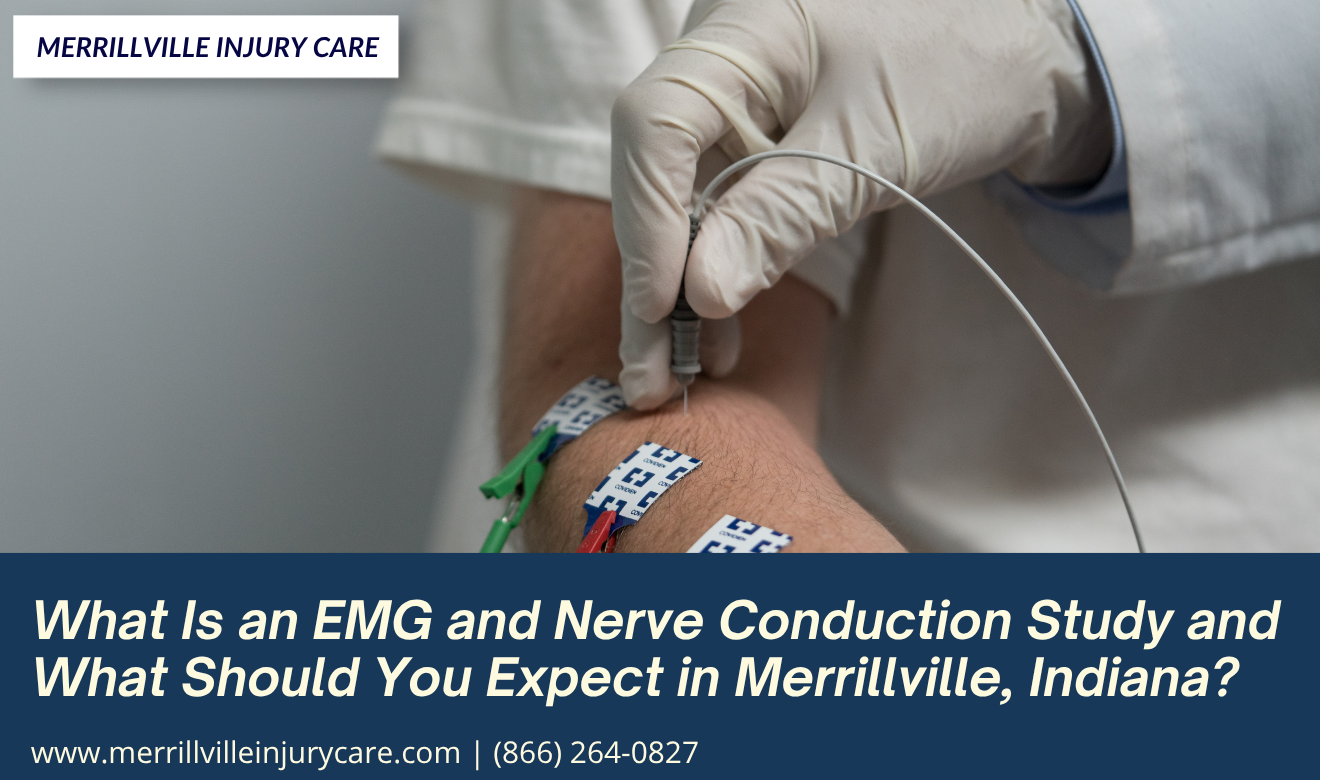
Executive Summary
EMG and nerve conduction studies work together to objectively measure nerve signal function and muscle response, helping identify where symptoms like numbness, tingling, pain, or weakness are coming from. The article emphasizes that these tests reduce diagnostic guesswork and guide targeted next steps such as therapy, imaging, injections, or surgical referral when appropriate.
Key Takeaways
- Two complementary tests provide a fuller diagnosis: NCS evaluates nerve signal speed/strength while EMG assesses muscle electrical activity, clarifying whether symptoms stem from nerve compression, nerve root irritation, generalized neuropathy, or muscle-related problems.
- The visit follows a predictable, step-by-step process: A focused history/exam is followed by surface-electrode nerve testing and then a thin-needle EMG in selected muscles, with results typically summarized and reported to the referring provider.
- Best for common, “answerable” nerve conditions: The studies commonly confirm or grade issues like carpal tunnel syndrome, ulnar neuropathy, cervical/lumbar radiculopathy, peroneal neuropathy, and peripheral neuropathy.
- Timing and preparation affect accuracy: Certain EMG changes may take time after acute injury, and practical steps (no lotion, loose clothing, disclose blood thinners/pacemakers, keep limbs warm) help ensure clean, interpretable data.
- Results directly influence treatment decisions: Findings help localize the problem, estimate severity/chronicity, and determine the most appropriate next step—rehab focus, targeted imaging, procedural options, or surgical urgency—while acknowledging that normal results don’t rule out every condition (e.g., small-fiber neuropathy).
An EMG and nerve conduction study is a set of tests that checks how well your nerves and muscles are working, helping pinpoint issues like pinched nerves, neuropathy, or carpal tunnel syndrome. If you’re scheduling EMG & Nerve Conduction Studies Merrillville, you can expect a visit that includes small sensors placed on your skin and, for the EMG portion, a thin needle electrode used to measure muscle activity. For example, if your hand keeps going numb at night, the test can show whether the median nerve is slowing at the wrist. If you have leg tingling and back pain, it can help tell the difference between sciatica and a more general nerve problem. The goal is simple: get clear answers so your next steps—like therapy, medication changes, or further imaging—are based on solid evidence.
What EMG and Nerve Conduction Studies Measure (and Why Both Matter)
EMG & Nerve Conduction Studies Merrillville typically refers to two complementary tests done together because nerves and muscles can fail in different ways.
- Nerve Conduction Study (NCS): Measures how fast and how strongly an electrical signal travels along a nerve. This is especially useful for “wiring problems,” like compression at the wrist in carpal tunnel syndrome or generalized peripheral neuropathy.
- Electromyography (EMG): Uses a fine needle electrode to record electrical activity in a muscle. This helps identify whether weakness, cramping, or muscle wasting is coming from nerve root irritation (like radiculopathy) or a primary muscle disorder.
Used together, EMG & Nerve Conduction Studies Merrillville can help clarify whether symptoms are coming from:
- a nerve trapped in one area (entrapment neuropathy)
- a pinched nerve in the neck or low back (radiculopathy)
- a widespread nerve issue (polyneuropathy)
- certain neuromuscular junction or muscle conditions (less common, but important to rule out)
How the Appointment Works: Step-by-Step
If you’re booked for EMG & Nerve Conduction Studies Merrillville, the visit usually follows a predictable flow. Knowing the steps ahead of time reduces anxiety and helps you prepare.
1) Quick history and focused exam
You’ll be asked about:
- where symptoms are (hand, foot, one side vs both)
- timing (night symptoms, activity-related, constant)
- weakness, dropping items, tripping, cramping
- medical conditions that affect nerves (e.g., diabetes, thyroid disease)
- prior imaging, injections, or surgery
2) Nerve conduction study (surface electrodes)
Small sensors are placed on the skin. A brief electrical pulse stimulates a nerve and the sensors record the response. It can feel like a quick “tap” or “snap,” but it’s usually very tolerable.
3) EMG (needle electrode in selected muscles)
A thin needle electrode is inserted into a few muscles to measure resting activity and activity with gentle contraction. The needle is much smaller than needles used for blood draws. Most people describe this portion as uncomfortable rather than painful.
4) Wrap-up and results pathway
Many clinicians can discuss a preliminary impression right away, with a formal report delivered to the referring provider shortly after. The main goal of EMG & Nerve Conduction Studies Merrillville is actionable clarity—so the next step isn’t guesswork.
What Conditions These Tests Commonly Diagnose
EMG & Nerve Conduction Studies Merrillville is commonly used when symptoms involve numbness, tingling, burning pain, radiating pain, or unexplained weakness.
Most common “answerable” problems
- Carpal tunnel syndrome: Slowed median nerve conduction across the wrist.
- Ulnar neuropathy: Often at the elbow; may cause numbness in the ring/small fingers.
- Cervical or lumbar radiculopathy: A nerve root irritated in the neck or back; EMG findings can support (or argue against) this.
- Peripheral neuropathy: Many causes; often starts in the feet with burning/tingling. In the U.S., diabetes is a leading cause of peripheral neuropathy (CDC).
- Peroneal neuropathy: Can cause foot drop; often near the knee.
When tests help rule things out
Sometimes the most valuable outcome is learning what it isn’t. For example, symptoms that feel like sciatica may not show radiculopathy and instead point toward a peripheral nerve entrapment or a non-nerve pain generator.
Why Timing Matters (and When to Schedule)
For suspected acute nerve injury, timing can affect what the EMG detects. In general, EMG changes from denervation may take time to become measurable after injury. That’s one reason your clinician may recommend waiting a short period after symptom onset—or repeating a study if symptoms evolve.
That said, EMG & Nerve Conduction Studies Merrillville can still be helpful early in many scenarios (like suspected entrapment neuropathies), because conduction slowing across a compression site can show up even when symptoms are relatively new.
How to Prepare (So Your Results Are Clean and Accurate)
To get the best-quality data from EMG & Nerve Conduction Studies Merrillville, small prep details matter.
- Skip lotion/oils on the day of testing (they interfere with electrode contact).
- Wear loose clothing so arms/legs can be accessed easily.
- Bring a medication list and relevant prior imaging reports if you have them.
- Tell the clinician if you take blood thinners or have a bleeding disorder—this doesn’t automatically prevent EMG, but it changes risk planning.
- Tell the clinician if you have a pacemaker/ICD—NCS is commonly performed safely, but the team will follow device-appropriate precautions.
If your symptoms are tied to a work injury or repetitive use, mention job tasks (gripping, vibrating tools, overhead work), because that context can influence nerve selection and interpretation.
What the Results Mean: Reading the “Story” in Plain English
A good report from EMG & Nerve Conduction Studies Merrillville doesn’t just list numbers—it answers: Where is the problem, how severe is it, and is it acute or chronic?
| Finding type | What it often suggests | Why it matters for next steps |
|---|---|---|
| Slowed conduction across a short segment (e.g., wrist) | Focal nerve compression (entrapment) | Supports splinting, ergonomic changes, injections, or surgical referral depending on severity |
| Reduced amplitude | Axonal loss (nerve fiber damage) | Often signals more severe injury and may predict longer recovery time |
| EMG denervation/reinnervation patterns | Nerve root irritation/injury or chronic nerve damage | Helps differentiate radiculopathy from peripheral entrapment and guides imaging/rehab planning |
| Diffuse abnormalities in multiple nerves | Generalized neuropathy | Often triggers lab workup, risk-factor control, and symptom management strategy |
Importantly, normal testing doesn’t mean symptoms aren’t real. Some conditions (like small-fiber neuropathy) may not show clearly on standard NCS/EMG, so your clinician may pivot to other evaluation tools based on your exam and history.
Cost and Insurance: What Most People Want to Know
The cost of EMG & Nerve Conduction Studies Merrillville varies widely depending on:
- how many nerves/muscles are tested
- whether one limb or multiple limbs are evaluated
- facility vs office setting
- insurance coverage, deductibles, and prior authorization rules
Practical tip: when you call, ask for an estimate using the planned testing scope (for example, “upper extremity EMG/NCS for suspected carpal tunnel”). Then confirm with your insurer whether the test is considered diagnostic and whether authorization is required.
What It Feels Like, Safety, and Side Effects
Most people tolerate EMG & Nerve Conduction Studies Merrillville well. Here’s what’s typical:
- NCS sensation: brief electrical pulses; startling but fast.
- EMG sensation: small pinprick and localized muscle soreness.
- After-effects: mild tenderness or bruising in tested muscles, usually resolving within 24–72 hours.
Serious complications are uncommon. The test is designed to be minimally invasive, and clinicians select muscles carefully to avoid higher-risk areas. Always disclose blood thinners and implanted devices so appropriate precautions are followed.
How Results Guide Treatment Choices
EMG & Nerve Conduction Studies Merrillville is most valuable when it changes what happens next. Common pathways include:
- Targeted rehabilitation: If nerve irritation is confirmed, a structured rehab plan may focus on nerve glides, posture mechanics, gradual strengthening, and symptom modulation. Many people pair diagnostic clarity with physical therapy to restore function safely.
- Image the right region: When EMG supports radiculopathy, clinicians may coordinate spine imaging. In many care plans, MRI Coordination is used to streamline appropriate next imaging once the suspected level is clearer.
- Procedures or injections: Confirming a specific pain generator can justify a more targeted approach (for example, an epidural for nerve root inflammation) rather than broad, trial-and-error treatment.
- Surgical decision support: In some cases—like severe carpal tunnel with significant nerve injury—testing helps determine urgency and expected recovery trajectory.
Real-World Examples: What These Tests Clarify
Example 1: Night numbness and hand weakness
A person reports waking up with numbness in the thumb, index, and middle fingers and dropping objects. EMG & Nerve Conduction Studies Merrillville may show slowed median nerve conduction at the wrist, supporting carpal tunnel syndrome rather than a neck problem. That distinction matters because treatment often starts with wrist bracing, activity modification, and targeted escalation if severe.
Example 2: Leg pain that “feels like sciatica”
Another person has tingling down the leg and low back pain. Testing may show findings consistent with a lumbar radiculopathy, or it may show a peroneal neuropathy near the knee, or even signs of a more generalized neuropathy. Each path changes what you image, how you rehabilitate, and what risks you look for medically.
Why These Tests Are Trusted in Neuromuscular Care
EMG & Nerve Conduction Studies Merrillville is used widely because it provides objective, physiologic data—not just anatomy. Imaging can show a disc bulge, but it can’t always prove whether that bulge is affecting nerve function. These tests help connect the dots between symptoms, exam findings, and functional nerve performance.
For context on how common nerve symptoms can be: the National Institute of Neurological Disorders and Stroke (NINDS) notes that carpal tunnel syndrome is the most common entrapment neuropathy in the U.S. That’s one reason studies like these are frequently ordered when hand numbness becomes persistent or function-limiting.
Getting the Most Accurate EMG/NCS: What to Look For
Accuracy isn’t just about the machine—it’s about method and interpretation. For EMG & Nerve Conduction Studies Merrillville, strong clinical practice typically includes:
- testing that matches the symptom map (not a one-size-fits-all template)
- side-to-side comparisons when appropriate
- careful temperature control for limb testing (cold limbs can artificially slow conduction)
- clear impression statements: location, severity, chronicity, and differential considerations
Also ask how results will be communicated and how they’ll integrate into your overall plan (rehab, imaging, medication strategy, or specialist referral).
From Uncertainty to a Clear Plan
When symptoms disrupt sleep, work, or basic daily tasks, guessing gets expensive—financially and physically. EMG & Nerve Conduction Studies Merrillville helps narrow the diagnosis, identify the level of nerve involvement, and quantify severity so care decisions are better grounded.
Clinicians who interpret EMG/NCS are typically physicians with specialized training in electrodiagnostic medicine (commonly within neurology or physical medicine and rehabilitation), where hands-on expertise and pattern recognition matter as much as the equipment. When performed and interpreted by qualified professionals, EMG & Nerve Conduction Studies Merrillville remains one of the most practical tools for turning numbness, tingling, and weakness into a focused treatment roadmap.
Frequently Asked Questions
Ready to Stop Guessing and Start Treating the Real Problem?
If numbness, tingling, or weakness is getting in the way of sleep, work, or everyday life, an EMG and nerve conduction study can give you the clear, objective answers you need to move forward with confidence. Schedule your EMG & Nerve Conduction Studies in Merrillville with Merrillville Injury Care to pinpoint what’s really going on—so your next step is targeted, efficient, and built around results (not guesswork).