 Same-Day MVA Appointments Available — No Insurance Required | Lien-Based Treatment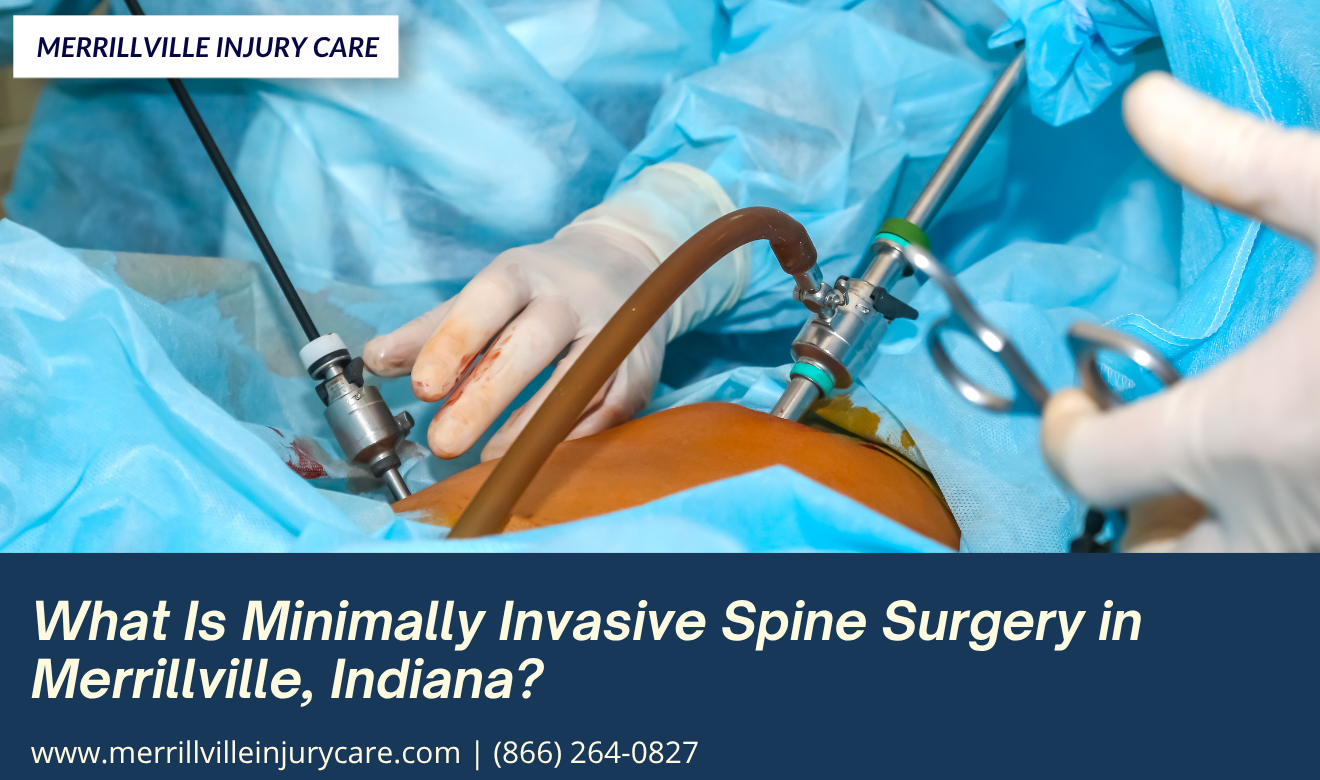
Executive Summary
Minimally Invasive Spine Surgery Merrillville is a muscle-sparing surgical approach that uses small incisions and imaging guidance to treat select neck and back conditions—primarily those caused by nerve compression or spinal instability. It can speed early mobility and reduce tissue disruption when symptoms clearly match imaging and the procedure is appropriately selected.
Key Takeaways
- Best Fit: Clear Nerve Compression or Instability — It is most commonly used for herniated discs, spinal stenosis, spondylolisthesis, and select degenerative conditions when a specific “pain generator” is identified.
- Technique Focus: Small Incision, Targeted Access — Surgeons often work through a tubular retractor with microscope/endoscope visualization to remove disc material, decompress nerves, or stabilize a segment with less disruption to nearby muscles.
- Benefits Depend on Proper Selection — Potential advantages include less muscle trauma, smaller incisions, reduced blood loss, shorter hospital stay for many cases, and earlier walking, but results vary by diagnosis and procedure type.
- Diagnosis-First Workup Drives Outcomes — MRI and X-rays (and sometimes EMG/NCS) are used to confirm that symptoms align with imaging, which is a key predictor that surgery will address the true source of pain.
- Minimally Invasive Still Carries Real Surgical Risks — Complications can include infection, bleeding, dural tear, nerve injury, recurrent herniation (after discectomy), nonunion (after fusion), and possible need for revision surgery.
Minimally Invasive Spine Surgery Merrillville is a modern approach to treating back and neck problems using smaller incisions, specialized instruments, and imaging guidance to reach the spine with less disruption to nearby muscles. Instead of a large open cut, a surgeon may work through a small tube to remove a herniated disc fragment, relieve pressure from a pinched nerve, or stabilize a painful spinal segment. For example, if sciatica is caused by a bulging disc, a minimally invasive discectomy can target the problem area while helping you get back to walking and daily tasks sooner. If spinal stenosis is making it hard to stand for long, a minimally invasive decompression can create more space for the nerves with less tissue damage than traditional surgery.
What Minimally Invasive Spine Surgery Merrillville Treats
Minimally Invasive Spine Surgery Merrillville is commonly used when pain, numbness, or weakness is caused by nerve compression or an unstable spinal segment. It can treat problems in the neck (cervical spine), mid-back (thoracic spine), and low back (lumbar spine), depending on the diagnosis and the specific technique.
Conditions often treated with Minimally Invasive Spine Surgery Merrillville include:
- Herniated or bulging discs causing sciatica or arm pain
- Spinal stenosis (narrowing of the spinal canal) causing leg heaviness, pain with standing/walking, or balance issues
- Degenerative disc disease when a specific level is clearly identified as the pain generator
- Spondylolisthesis (one vertebra slipping over another) that leads to nerve symptoms or instability
- Facet joint-related pain in select cases when other treatments fail and imaging supports a surgical target
- Recurrent disc herniation after prior surgery, when anatomy and imaging allow a minimally invasive approach
How Minimally Invasive Spine Surgery Works (Step-by-Step)
People searching for Minimally Invasive Spine Surgery Merrillville usually want a clear picture of what happens during the procedure. While the exact steps vary by diagnosis (discectomy vs. decompression vs. fusion), the workflow often looks like this:
- Imaging-guided planning using MRI/CT/X-ray to pinpoint the pain source and select the safest access route.
- Small incision (often about 1–2 inches, sometimes smaller depending on the technique).
- Muscle-sparing access by gently dilating tissue rather than stripping muscle off bone (a key difference from traditional open surgery).
- Tubular retractor placement to create a working “tunnel” to the spine.
- Microscope or endoscope visualization to see nerves and disc/bone structures clearly.
- Targeted repair such as removing a disc fragment (microdiscectomy), shaving bone/ligament (laminotomy/foraminotomy), or stabilizing a segment (minimally invasive fusion).
- Closure with fewer layers and typically less tissue disruption than open procedures.
Because Minimally Invasive Spine Surgery Merrillville is designed to limit collateral tissue injury, many patients experience less postoperative muscle pain and a faster transition to walking and basic daily activities—though recovery timelines still depend heavily on the diagnosis and the extent of surgery.
Why the “Minimally Invasive” Approach Can Matter
Minimally Invasive Spine Surgery Merrillville isn’t automatically “better” for every spine problem, but it can offer meaningful advantages in appropriately selected cases.
Potential benefits often include:
- Less muscle disruption, which may reduce postoperative soreness
- Smaller incisions and often less blood loss
- Shorter hospital stay for many procedures and patients
- Earlier mobility (walking is often encouraged soon after surgery)
- Lower infection risk is reported in many minimally invasive approaches compared with open surgery, though risk varies based on procedure type and health factors
Real-world context: In large U.S. datasets, lumbar microdiscectomy is commonly performed as an outpatient or short-stay procedure, and minimally invasive techniques are frequently used. The exact length of stay varies by comorbidities, surgical complexity, and whether a fusion is involved.
What to Expect Before Surgery: Imaging, Nerve Testing, and Clear Diagnosis
One of the biggest drivers of outcomes is whether symptoms match imaging findings. Minimally Invasive Spine Surgery Merrillville works best when there is a clear “pain generator” and a clear surgical target (for example: right L5-S1 disc herniation compressing the S1 nerve root, matching right-sided sciatica).
Diagnostic tools commonly used
- MRI to evaluate discs, nerves, stenosis, and soft tissues. If logistics are a barrier, MRI Coordination can help streamline scheduling and documentation.
- Digital X-ray for alignment, instability clues, and degenerative changes (and dynamic flexion-extension views when needed).
- EMG/Nerve Conduction Studies when symptoms are complex (for example, differentiating radiculopathy from peripheral neuropathy). Many patients explore additional detail in EMG & Nerve Conduction Studies when nerve symptoms don’t perfectly match imaging.
Quick “snippet” checklist: signs your workup is surgical-level
- Leg-dominant pain (sciatica) that matches a compressed nerve on MRI
- Progressive weakness (foot drop or worsening motor deficits)
- Neurogenic claudication from stenosis (pain/heaviness with standing or walking that improves with sitting or bending forward)
- Failure of structured non-surgical care over time (medication, guided injections, and rehab)
How Doctors Decide If You’re a Good Candidate
Minimally Invasive Spine Surgery Merrillville is typically recommended when benefits clearly outweigh risks and when non-surgical care has not provided adequate relief. Selection is critical because not every spine problem can be safely or effectively treated through small portals.
Common factors that support minimally invasive candidacy
- Symptoms correlate to imaging (the strongest predictor that surgery addresses the true source)
- Limited number of spinal levels involved (many minimally invasive procedures focus on one or two levels)
- Healthy bone quality if implants/fusion are considered
- Reasonable medical risk profile (diabetes control, smoking status, heart/lung health)
Factors that may push toward a different approach
- Severe multi-level deformity or complex scoliosis requiring broad correction
- Extensive spinal instability requiring large reconstruction
- Infection, tumor, or fracture cases where exposure needs are different
- Severe osteoporosis that compromises fixation strength
What Minimally Invasive Spine Surgery Merrillville Looks Like for Common Procedures
Below is a structured comparison of frequently discussed minimally invasive options. (Specific technique names may vary by surgeon.)
| Procedure type | Typical goal | Common symptom pattern |
|---|---|---|
| Minimally invasive microdiscectomy | Remove disc fragment compressing a nerve | Sharp leg pain (sciatica), numbness/tingling, sometimes weakness |
| Minimally invasive decompression (laminotomy/foraminotomy) | Create space for nerves by removing bone/ligament | Stenosis symptoms: leg heaviness with walking, relief with sitting |
| Minimally invasive fusion (MIS TLIF/PLIF variations) | Stabilize a painful/unstable segment and decompress nerves | Back pain plus nerve symptoms; instability or spondylolisthesis on imaging |
| Minimally invasive cervical procedures (select cases) | Relieve arm pain/weakness from nerve root compression | Neck-to-arm pain, numbness in specific fingers, grip weakness |
Cost: What Impacts the Price of Minimally Invasive Spine Surgery?
The cost of Minimally Invasive Spine Surgery Merrillville can vary widely because “spine surgery” isn’t one item—it’s a bundle of variables. Insurance coverage, deductibles, facility type (hospital vs. outpatient center), and whether implants are used make a major difference.
Key cost drivers
- Procedure type: a microdiscectomy is typically less complex than a fusion.
- Number of levels treated: one level vs. multi-level changes time, supplies, and rehab needs.
- Implants and biologics: screws, cages, and graft materials increase cost.
- Length of stay: same-day discharge vs. inpatient admission.
- Pre-op testing: MRI, X-rays, and sometimes EMG studies.
- Post-op rehab: physical therapy and activity-specific reconditioning.
Practical takeaway: If you want the most accurate estimate, ask for an itemized breakdown and confirm what is billed separately (surgeon, anesthesia, facility, implants, imaging, and postoperative therapy).
How Recovery Typically Works (and What You Can Do to Improve It)
Recovery after Minimally Invasive Spine Surgery Merrillville is often faster than traditional open surgery, but “faster” doesn’t mean “instant.” Nerves can take time to calm down, and reconditioning matters.
General recovery milestones (varies by procedure and patient)
- First 24–72 hours: walking is usually encouraged; pain is managed with a step-down plan.
- First 2 weeks: focus on incision care, short walks, and avoiding heavy bending/twisting as instructed.
- Weeks 2–6: gradual increase in walking and daily tasks; return-to-work depends on job demands.
- After 6+ weeks: structured strengthening and conditioning (especially after fusion or multi-level decompression).
Rehab matters more than most people think
Whether your surgery is for a disc herniation or stenosis, the goal is not only to “fix the structure,” but also to rebuild tolerance for movement. A common evidence-based pathway includes progressive mobility, core endurance work, and education on lifting and posture mechanics. Many patients also benefit from understanding the role of physical therapy as a structured, goal-based return to function rather than just passive treatment.
Mini case example (typical pattern)
A 42-year-old warehouse worker has 10 weeks of right-sided sciatica with MRI-confirmed L5-S1 disc herniation and persistent calf numbness. After trying medication, guided activity changes, and rehab without meaningful improvement, a minimally invasive microdiscectomy is performed. Leg pain improves quickly, but numbness resolves gradually over weeks to months—consistent with how irritated nerves often recover after decompression. A staged return-to-work plan and strengthening reduces recurrence risk.
What Risks Still Exist (Even When the Incision Is Small)
Minimally Invasive Spine Surgery Merrillville is still real surgery. Smaller access does not eliminate risk—it changes the approach. A good surgical plan includes a clear discussion of complications and how they’re minimized.
Commonly discussed risks
- Infection
- Bleeding
- Dural tear (spinal fluid leak)
- Nerve irritation or injury
- Recurrent disc herniation after discectomy
- Nonunion (failure of bones to fuse) after fusion, with higher risk in smokers
- Need for revision surgery depending on anatomy and disease progression
Red-flag symptoms after surgery (seek urgent care)
- New or worsening weakness
- Loss of bowel or bladder control
- Fever with wound drainage
- Severe headache worse when upright (possible spinal fluid leak)
Why Some People Still Need Non-Surgical Treatments First
One reason Minimally Invasive Spine Surgery Merrillville is not the first step for every patient is that many back and neck conditions improve with time and conservative care. For non-emergency cases, guidelines commonly recommend a period of non-surgical management before considering elective spine surgery.
Non-surgical options often include:
- Activity modification and a walking program
- Anti-inflammatory or nerve-pain medications when appropriate
- Image-guided injections (such as epidural steroid injections) for select cases
- Progressive rehabilitation focusing on strength, mobility, and tolerance
When symptoms persist, worsen, or clearly match a compressive lesion on imaging, Minimally Invasive Spine Surgery Merrillville becomes a more direct way to relieve the mechanical pressure driving pain.
How to Choose the Right Surgeon and Facility
If you’re considering Minimally Invasive Spine Surgery Merrillville, choose based on clarity, safety, and outcomes—not marketing. Your goal is a surgeon who can explain the diagnosis, prove the target on imaging, and outline a plan that includes both surgical and non-surgical options.
Questions worth asking (snippet-ready)
- What exact structure is causing my symptoms, and how do we know?
- What procedure are you recommending and why this approach?
- What are the alternatives (including no surgery), and what happens if I wait?
- What is the expected timeline for walking, driving, and returning to work?
- How do you prevent infection and blood clots?
- How often do you perform this specific minimally invasive procedure?
Back-to-Life Blueprint: Putting Minimally Invasive Spine Surgery Merrillville Into Perspective
Minimally Invasive Spine Surgery Merrillville can be a high-value option when symptoms, imaging, and functional limits line up—especially for sciatica from disc herniation or leg pain from stenosis. The best outcomes typically come from a complete pathway: accurate diagnosis, the right procedure for the right problem, and disciplined recovery focused on walking, strength, and movement confidence.
To stay aligned with EEAT principles, look for care teams led by board-certified spine specialists (orthopedic spine surgeons or neurosurgeons) who regularly treat degenerative spine conditions, use evidence-based diagnostic pathways (MRI/X-ray and EMG when needed), and coordinate postoperative rehabilitation with licensed clinicians. Minimally Invasive Spine Surgery Merrillville is most effective when it’s not just “small incision surgery,” but a carefully selected, medically justified plan built around safety, function, and durable relief.
Keyword check: Minimally Invasive Spine Surgery Merrillville
Keyword check: Minimally Invasive Spine Surgery Merrillville
Keyword check: Minimally Invasive Spine Surgery Merrillville
Frequently Asked Questions
Ready to Get Answers About Minimally Invasive Spine Surgery in Merrillville?
If back or neck pain is limiting your life—and you’re wondering whether a minimally invasive approach could help—get a clear, diagnosis-first plan from a team that knows what to look for. Merrillville Injury Care can help you review symptoms, match them to the right imaging, and map out the smartest next step—whether that’s conservative care, a referral, or a more direct path to relief.